
EU:s digitala identitetsplånbok är på väg, och den kommer att förändra hur vi loggar in, legitimerar oss och bevisar vem vi är på nätet. För svenska användare som redan vant sig vid BankID handlar det less om en revolution och more om en standardisering across Europe.
Vad är eIDAS 2.0?
eIDAS 2.0 är EU:s uppdaterade förordning for electronic identification and trust services. Den bygger på den ursprungliga eIDAS-förordningen from 2014, but går significantly longer by requiring all member states to offer a digital identity wallet to their citizens.
The wallet is voluntary for citizens to use, but mandatory for member states to provide. This means that Sweden must offer the wallet, but you as a user choose whether you want to use it or continue with existing solutions like BankID.
How does the wallet work in practice?
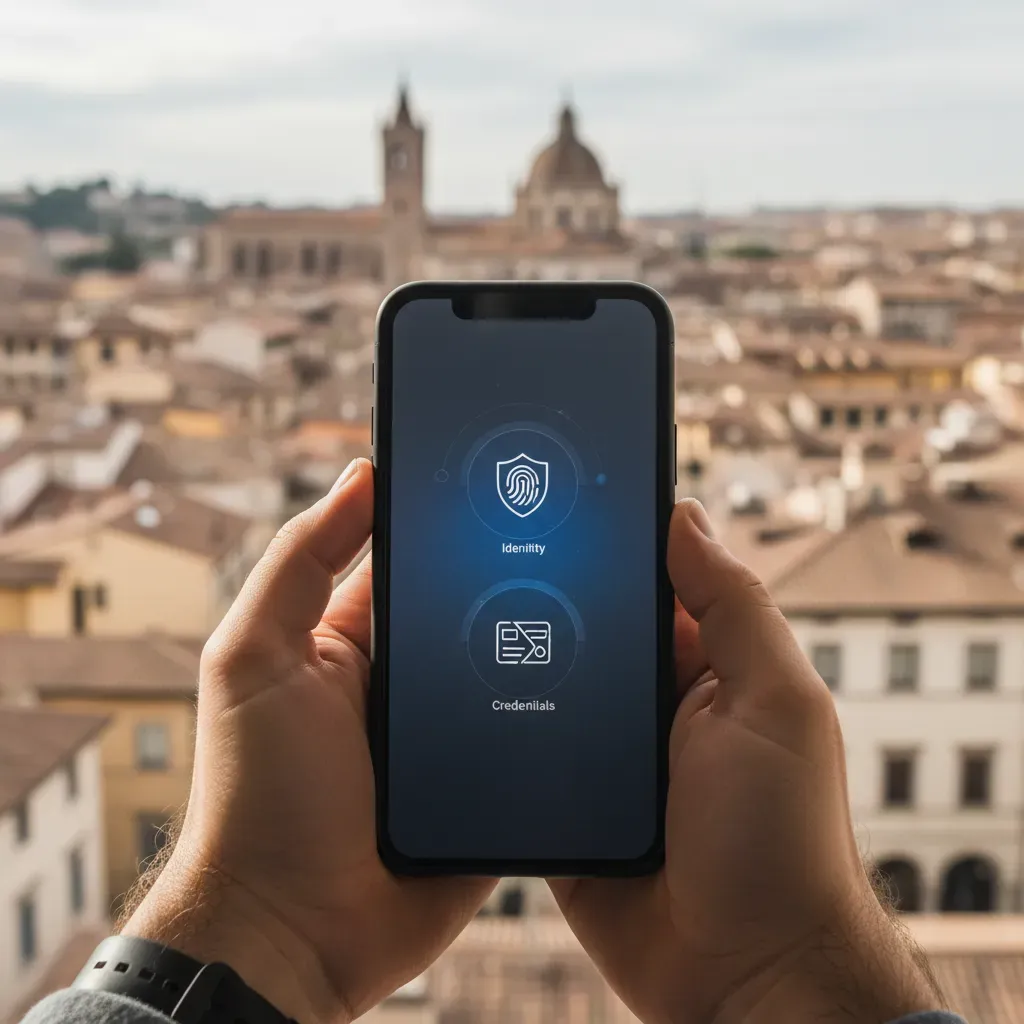
The idea is simple: you gather your ID documents, certificates and credentials in one digital wallet on your phone. Think of it as a physical wallet, but digital and cryptographically secured.
Examples of what the wallet can contain:
-
National eID (like BankID)
-
Driving license
-
Passports
-
Diplomas and educational certificates
-
Professional qualifications
-
Medical prescriptions
When you need to prove your identity or a specific attribute, you open the wallet and choose which information to share. The crucial difference compared to today is that you can share just what is necessary. If a service needs to confirm that you are over 18, the wallet can prove it without revealing your exact age or personal identity number.
What does this mean for Swedish users?
Sweden already has a well-functioning eID infrastructure through BankID. Many Swedes identify themselves daily with BankID for everything from online banking to Skatteverket. The question many ask is whether the EU wallet replaces BankID.
The short answer is no, not directly. The EU wallet is designed to coexist with national solutions. BankID can in principle be integrated as one of the credentials in the wallet. But in the longer term, the wallet can become a hub that gathers several different types of credentials, beyond just identity.
For Swedish companies and authorities, this means that they will need to adapt their services to also accept the EU wallet. Especially for cross-border use, this is a big advantage. Today it can be difficult for a Swedish citizen to identify themselves to an authority in another EU country. With the wallet, that becomes significantly simpler.
Privacy and security
One of the most discussed aspects of the EU wallet is privacy. EU has emphasized that the wallet must be designed with privacy by design. This means that users retain control over what data is shared and with whom.
The technique used is so-called selective disclosure and zero-knowledge proofs. In practice, this means that you can prove a statement (for example, that you have the right to drive a car) without revealing more than exactly that. No central database stores all your transactions, which is an important difference from many today’s systems.
However, there are still question marks. How the wallet is implemented in practice in each member state can affect how privacy is actually protected. Sweden’s work on implementing the wallet is ongoing and it is not yet clear exactly which technical platform will be used.
Timeline and implementation
EU’s regulation entered into force in 2024 and member states have a transition period to implement the wallet. The goal is for the wallet to be available to citizens within the next couple of years. Exactly when Swedish users can download and start using the wallet depends on how the implementation work proceeds.
For Swedish companies and organizations, it is wise to start preparing now. Adapting IT systems to accept a new form of eID takes time, and those who start early get a head start when the wallet becomes a reality.
What should you think about as a user?
As a private user, you do not need to do anything right now. The wallet will be voluntary, and you can continue using BankID as usual. But it can be good to keep up to date with how the implementation develops, especially regarding how your data is handled and what security measures are built in.
The EU digital identitetsplånbok is not a threat to existing solutions, but a complement that can make it easier to move and act digitally across Europe. For those who travel, study or work in other EU countries, it can become a practical tool that reduces bureaucracy and simplifies everyday life.